A Brief History of Great Power: 30 Years of Innovation
Battery technology has changed dramatically over the past three decades, moving from portable electronics toward electric mobility and large-scale energy infrastructure. Great Power’s development reflects this broader transformation. Founded in 2001, the company has built more than two decades of experience in battery research and manufacturing and introduced its first-generation energy storage battery in 2011. As 2026 marks its 25th year, its development provides a useful perspective on the evolution of modern battery technology.
From Battery Research to Energy Storage
The company’s early development focused on battery technology and manufacturing capabilities. In 2001, its 1800mAh Ni-MH battery was recognized as reaching an international advanced level. Further technical work followed, including lithium polymer and lightweight battery technologies and the development of lithium-based products.
This early emphasis on battery chemistry, cell structure, and manufacturing processes established a foundation for later energy applications. In 2009, the company also participated in drafting industry standards concerning lithium iron phosphate and lithium manganese dioxide battery modules, demonstrating involvement beyond individual product development.
2011: Entering the Energy Storage Market
A major milestone came in 2011 with the launch of the company’s first-generation energy storage battery. This was an important transition from batteries designed primarily for portable and specialized applications toward products intended for stationary energy storage.
The timing was significant. Renewable generation was expanding, while power systems were beginning to require greater flexibility in storing and dispatching electricity. Energy storage could provide a way to shift electricity across different periods and support emerging renewable energy applications.
Over the following years, the company continued expanding its battery manufacturing and technical capabilities, creating the basis for larger energy storage solutions.
Expanding Through Manufacturing and Technology
The company expanded through both technological development and manufacturing growth. It completed its IPO and acquired Japan-based Nexcell in 2015, established operations in Changzhou and acquired SHIDA Battery in 2018, then expanded to Liuzhou and made energy storage a strategic focus in 2019.
During this period, it mass-produced high-nickel ternary batteries and launched 6C fast-charging EV batteries. These developments strengthened its capabilities across materials, cell design, manufacturing, and quality control.
Building a Broader Energy Storage Portfolio
As energy storage became a strategic priority in 2019, the company’s portfolio developed beyond individual cells. Today, its energy storage offerings span cells, packs, racks, cabinets, and complete container systems, covering utility-scale, commercial and industrial, residential, UPS backup, and portable applications.
This progression is important because large storage projects require coordinated performance across multiple levels. A complete energy storage system must combine battery technology with thermal management, electrical protection, monitoring, control, and communication functions.
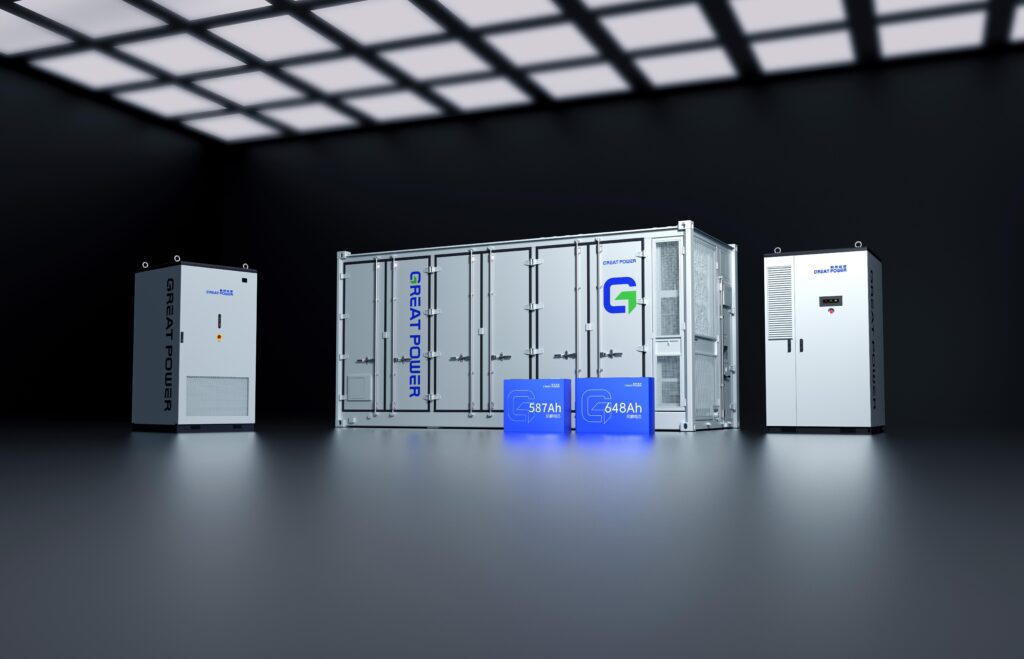
An energy container represents the result of this system-level development. Rather than treating batteries as isolated components, containerized systems integrate storage equipment into a standardized installation platform suited to large-scale projects.
Exploring New Battery Chemistries
Innovation has expanded beyond conventional Li-ion Battery technology. Research into Sodium-ion Battery technology began in 2019, with development of layered oxide and polyanion systems. By 2022, small cylindrical sodium-ion batteries entered trial production and sample testing.
The company has also explored solid-state technology, reporting the development of its first-generation solid-state battery in 2024. These efforts reflect the industry’s growing focus on alternative chemistries and evolving energy storage needs.
From Cells to Containerized Battery Storage
The evolution toward complete storage systems is visible in the current large-scale product portfolio. The Max 6250 features self-developed Ultra 588Ah battery cells, a liquid-cooled PACK, and a six-level safety protection system for liquid-cooled energy storage cabinets.
The Max 5000 takes an integrated approach within a 20-foot container. The system is also designed for wind and photovoltaic generation and locations with significant peak-valley price differences or load fluctuations.
The Max 3440 demonstrates another direction in system development, combining high integration with support for third-party SCADA and cloud-based EMS platforms.
Scaling Innovation for Global Applications
Great Power has continued expanding its manufacturing and international presence alongside product development. Its current company information lists more than 10,000 employees, 12 facilities, and more than 2.37 million square meters of total site area. It also reports energy storage products installed in more than 50 countries and areas.
Its research infrastructure includes a national-level postdoctoral research center, four provincial-level research centers, six research institutes, four testing centers, and more than 2,800 engineers according to its latest R&D information.
This combination of research and manufacturing capacity supports the transition from laboratory concepts to commercially deployable storage systems.
Looking Toward the Next Five Years
Although the company is not yet 30 years old, its history already spans 25 years in 2026. The period from 2001 to today covers major shifts from Ni-MH and early lithium technologies to Li-ion Battery systems, Sodium-ion Battery development, and integrated utility-scale storage.
Its product roadmap also shows continued development of larger-capacity cells and energy storage systems, with container solutions progressing toward higher safety, efficiency, longer cycle life, and improved integration.
The next stage will likely focus on making storage more efficient, scalable, intelligent, and adaptable to increasingly complex electricity systems.
Conclusion
The history of Great Power is closely connected with the broader evolution of battery technology. From its 2001 foundation and early battery research to its 2011 entry into energy storage and subsequent development of utility-scale systems, the company has expanded from battery manufacturing toward integrated energy solutions.
Today, an energy container represents more than a large battery enclosure. It reflects years of work in cell chemistry, manufacturing, safety, thermal management, and system integration. As containerized battery storage becomes increasingly important to renewable energy and modern power infrastructure, continued investment in these technologies will remain central to the industry’s next stage of development.