Strengthening Commercial Security With Modern Door Access Control Systems
Commercial security has changed considerably as businesses face more complex challenges around protecting employees, property, equipment, and sensitive information. Traditional locks still have a place, but relying entirely on physical keys can create security gaps that are difficult to manage. Lost keys, unauthorized duplication, employee turnover, and limited visibility over building entry can all make conventional security less effective.
Modern door access control systems offer businesses a more flexible approach. They allow organizations to determine who can enter specific areas, when access is permitted, and how entry activity is managed. Access control technology can play a significant role in a more comprehensive business security plan for everything from offices and warehouses to healthcare institutions and retail establishments.
Moving Beyond Traditional Keys
Physical keys are simple, but managing them becomes increasingly complicated as an organization grows. A company with dozens or hundreds of employees may need to distribute keys across multiple departments, offices, storage rooms, and restricted areas.
When an employee leaves without returning a key, the business may need to replace or rekey locks. There is also little practical control over whether a traditional key has been copied.
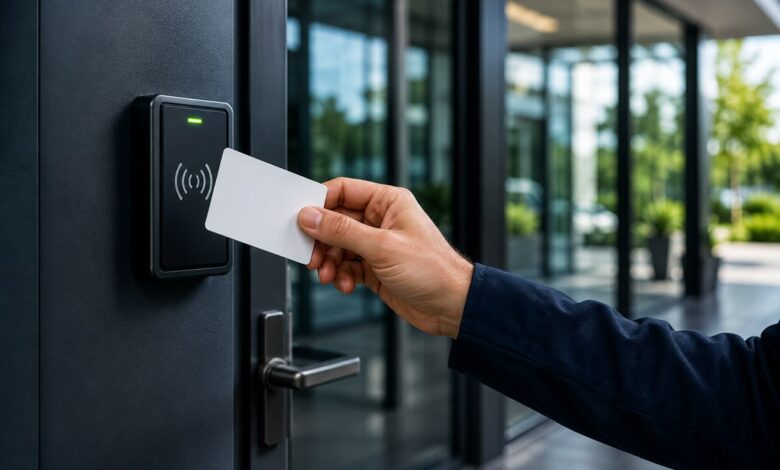
Electronic access changes this process. Instead of depending solely on mechanical keys, businesses can use cards, fobs, codes, mobile credentials, or other approved identification methods. Access privileges can generally be changed without physically replacing every affected lock.
This gives facility managers greater control while reducing some of the administrative difficulties associated with traditional key management.
Creating Different Levels Of Access
Not every employee needs access to every part of a commercial property. An office worker may need entry to the main building and their department, while IT personnel might require access to server rooms. Managers may need additional permissions for storage areas, records rooms, or other restricted spaces.
Modern access control makes it possible to build permissions around roles and responsibilities. Businesses can create different access levels and adjust them as employee responsibilities change.
This approach can be particularly valuable in larger facilities where internal security is just as important as controlling the main entrance. Rather than treating the entire building as a single security zone, companies can protect individual areas according to their importance.
Improving Visibility Over Building Entry
One limitation of conventional locks is the lack of information they provide. A key may open a door, but the lock itself does not provide useful insight into who entered or when the entry occurred.
Many modern systems can maintain access records that help authorized personnel review entry activity. This added visibility can support security investigations, facility management, and internal accountability.
For example, unusual entry attempts or activity outside expected working hours may warrant further review. Access records can provide additional context when security teams are investigating an incident.
The objective is not simply to control doors. It is to give businesses better information about how secured areas are being accessed.
Responding Quickly To Personnel Changes
Employee turnover presents an ongoing challenge for commercial security. When workers, contractors, or temporary staff leave an organization, their access should no longer remain active.
With traditional keys, retrieving every key can be difficult. Electronic credentials provide a more manageable alternative because individual permissions can typically be disabled without affecting everyone else.
The same flexibility is useful when employees change roles. Permissions can be updated according to their new responsibilities rather than issuing an entirely new collection of physical keys.
Temporary access can also be useful for contractors, maintenance professionals, vendors, and other visitors who only require entry for a limited period.
Supporting Security Across Multiple Entry Points
Commercial properties often have more doors to manage than the main entrance. Employee entrances, loading areas, warehouses, parking access points, stockrooms, and administrative spaces can each present different security requirements.
A properly planned access control strategy considers how these areas work together. Higher risk locations may require stricter permissions, while frequently used employee entrances may prioritize efficient movement without compromising security.
Centralized management can also make it easier to oversee access across several doors or areas. This is particularly useful for organizations operating larger facilities where manually managing individual locks would be inefficient.
Combining Security With Everyday Convenience
Effective security should protect a property without creating unnecessary obstacles for authorized users. Employees who regularly move through a facility need a practical way to enter approved areas.
Modern door access control systems can support this balance by making authorized entry straightforward while keeping restricted spaces protected. Depending on the requirements of the property, businesses can select technologies that suit their operations and security priorities.
The best approach is not necessarily the most complicated system. A smaller office may have very different needs from a warehouse, healthcare facility, school, or multi-tenant commercial building. Assessing entry points, employee movement, sensitive areas, operating hours, and potential vulnerabilities helps determine the appropriate setup.
Building A Stronger Commercial Security Strategy
Door access control should be viewed as one component of a broader security plan rather than an isolated upgrade. When combined with appropriate policies, employee awareness, surveillance, alarms, and other protective measures, controlled entry can help businesses develop a more comprehensive approach to facility security.
As workplaces become more dynamic, businesses need security measures that can adapt alongside them. Modern access control provides the flexibility to change permissions, manage different areas, and maintain greater visibility over entry activity.
By replacing uncontrolled key distribution with structured access management, commercial organizations can strengthen protection while keeping everyday building entry practical for the people who are authorized to be there.